





8,000 Aspirants for 187 Posts: Odisha Home Guard Recruitment Exam on Airstrip
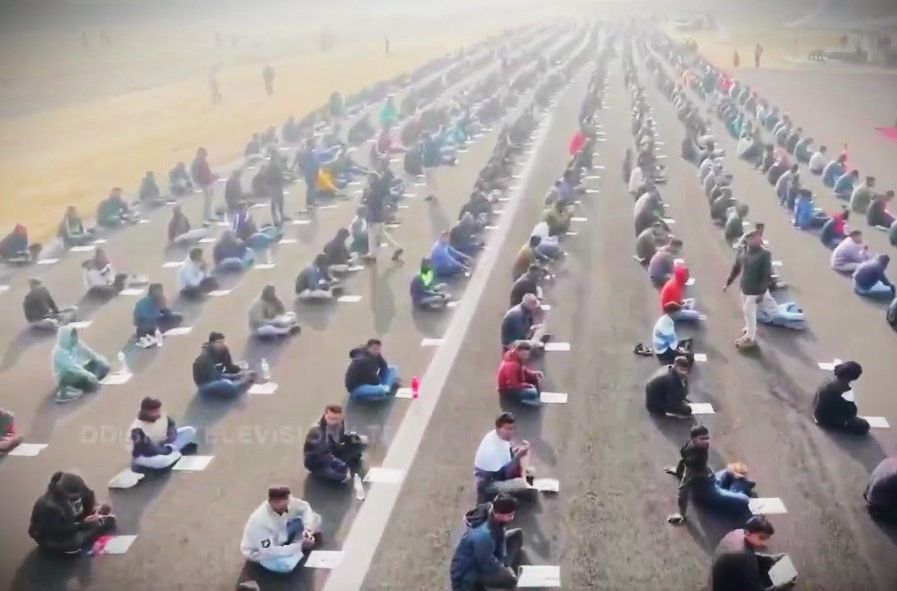
In a scene that powerfully captures the reality of India’s employment crisis, an airstrip in Odisha was transformed into a massive examination hall as over 8,000 aspirants gathered to compete for just 187 Home Guard vacancies.
The unusual setting, with candidates seated in long rows under open skies, has sparked widespread discussion across the country. It is not merely an administrative arrangement — it is a visual representation of the intense pressure faced by job seekers today.
Why an Airstrip Was Used as an Exam Centre
Authorities chose the airstrip due to the sheer number of candidates appearing for the recruitment examination. Traditional exam centres were insufficient to accommodate such a large crowd while maintaining order and visibility.
The open, expansive space of the airstrip allowed officials to:
- Seat thousands of candidates safely
- Prevent overcrowding
- Ensure clear supervision
- Conduct the examination smoothly
While logistically effective, the decision also unintentionally highlighted the scale of unemployment and competition.
8,000 Aspirants for Just 187 Posts
The numbers alone tell a sobering story.
For 187 Home Guard positions, more than 8,000 applicants showed up — meaning fewer than 3 out of every 100 candidates would secure a job. (source)
Such competition is not unique to Odisha. Across India, government and semi-government jobs attract massive crowds due to:
- Job security
- Stable income
- Social respect
- Limited opportunities in the private sector
For many aspirants, these exams represent hope amid uncertainty.
Home Guard Jobs: Modest Pay, Massive Demand
Home Guard positions are not high-paying roles. Yet, they attract enormous interest, especially from rural and semi-urban areas. The reasons are simple:
- Guaranteed employment
- Regular work
- Entry into public service
- Financial stability for families
For thousands of young Indians, even modest government jobs offer dignity and predictability in an otherwise volatile job market.
A Snapshot of India’s Employment Reality
The image of an airstrip filled with exam desks has become symbolic. It reflects:
- The gap between education and employment
- Limited job creation
- Rising population of job seekers
- Heavy dependence on government recruitment
This single examination encapsulates challenges faced nationwide.
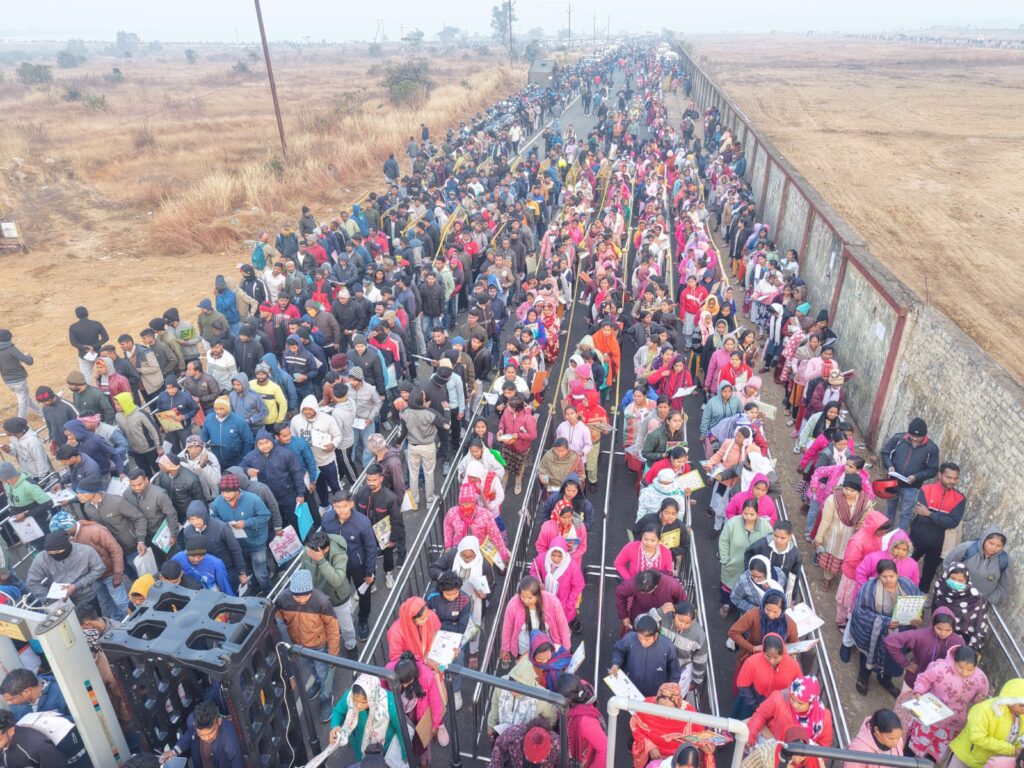
The Aspirants’ Perspective
Behind every candidate sitting on that airstrip is a personal story — years of preparation, family expectations, financial strain, and relentless effort.
Many candidates travel long distances, spend savings, and put their lives on hold in pursuit of a stable job. For them, the exam is not just a test — it is a turning point.
Policy Questions and the Road Ahead
Scenes like this raise critical questions:
- Is India creating enough jobs for its youth?
- Can skill development keep pace with population growth?
- How can private sector employment be strengthened?
While authorities manage logistics efficiently, long-term solutions require systemic changes in education, industry, and employment policy.
Conclusion: More Than an Exam, a Wake-Up Call
The Odisha airstrip examination is more than a viral visual. It is a wake-up call.
It reminds us that behind statistics are real people competing fiercely for limited opportunities.
As India moves forward, addressing employment generation must remain a top priority — because ambition is abundant, but opportunities must keep pace.
One exam. One airstrip. Thousands of dreams.