





Tragedy in Assam: Rajdhani Express Derailment Claims Lives of Eight Elephants
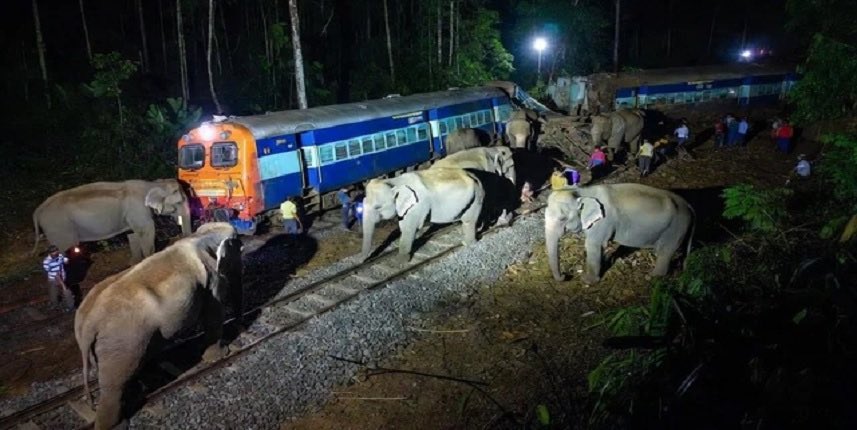
A heartbreaking incident unfolded in Assam when five coaches of a Rajdhani Express derailed following a collision, leading to the death of eight elephants.
The tragedy has left wildlife lovers, conservationists, and citizens across the country deeply shaken.
While railway services were affected temporarily, the loss of these majestic animals has drawn national attention to the ongoing conflict between infrastructure expansion and wildlife protection.
What Happened in Assam
According to preliminary reports, the Rajdhani Express collided in an area known to be part of an elephant movement corridor.
The impact led to the derailment of five coaches and proved fatal for the elephants involved.
Fortunately, there were no immediate reports of passenger fatalities, but the wildlife loss has been described as devastating.
Elephant Corridors and Railway Lines: A Dangerous Overlap
Assam is home to several elephant corridors that have existed for centuries.
As railway lines and highways cut through these natural paths, encounters between trains and wildlife have become alarmingly frequent.
Experts have long warned that without adequate safeguards, such incidents would continue.
Why This Tragedy Matters
Elephants are not just animals — they are a keystone species crucial to forest ecosystems.
Losing eight elephants in a single incident is a severe blow to conservation efforts.
This tragedy underscores:
- The urgent need for speed restrictions in forest zones
- Installation of early-warning and detection systems
- Better coordination between forest departments and railways
- Long-term planning that respects wildlife corridors
Calls for Accountability and Preventive Measures
Following the incident, conservation groups and citizens have renewed demands for:
- Real-time animal detection technology
- Underpasses and overpasses for wildlife
- Improved fencing and monitoring
- Strict enforcement of night-time speed limits
Preventing future tragedies requires systemic change, not temporary reactions.
Conclusion: A Wake-Up Call for Wildlife Safety
The Assam elephant tragedy is not just an accident — it is a warning.
As India continues to modernise its infrastructure, wildlife protection must move at the same pace.
Development and conservation cannot exist in isolation.
If urgent steps are not taken, the cost will continue to be paid by the voiceless.
May the departed elephants rest in peace. 🐘💔
This tragedy must not be forgotten.