




Jaishankar’s Sharp Reply on Leadership Highlights What Truly Shapes a Nation
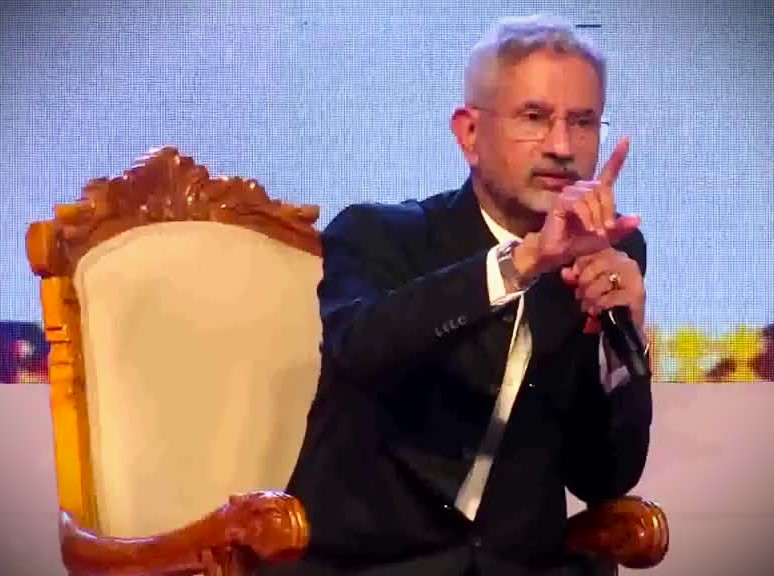
In a moment that instantly caught public attention, External Affairs Minister Dr. S. Jaishankar delivered a sharp and thought-provoking response to a question that asked whether one Jaishankar is enough for the country.
Instead of accepting praise or focusing on himself, Jaishankar reframed the entire conversation — shifting the spotlight from individuals to leadership, vision, and national direction. His words resonated widely because they addressed a deeper truth about how nations are built and led.
“Your Question Is Wrong” — A Response That Changed the Tone
Jaishankar began by directly challenging the premise of the question.
According to him, the real question should not be about whether one individual is enough, but about who provides the vision that guides the country.
He explained that while there are many capable individuals who execute policies, countries are ultimately defined by leadership and clarity of vision. Without that guiding force, even the most efficient execution loses direction.
This response immediately stood out because it was not defensive, emotional, or self-centred. Instead, it was structured, confident, and rooted in governance philosophy.
Leadership vs Execution: Understanding the Difference
One of the most important ideas in Jaishankar’s statement was the distinction between visionary leadership and execution.
Execution involves:
- Implementing policies
- Carrying out decisions
- Managing systems and institutions
Leadership, however, involves:
- Setting long-term goals
- Defining national priorities
- Providing confidence during uncertainty
- Giving direction to institutions
Jaishankar made it clear that while execution is essential, it must flow from a clear and consistent vision. Without that, governance becomes reactive rather than strategic.
Why This Statement Resonated With So Many People
Jaishankar’s response struck a chord because it came at a time when global politics is marked by uncertainty, shifting alliances, and constant crises. In such an environment, nations look for stability, confidence, and clarity.
His words reflected a belief that:
- Leadership must be decisive
- Vision must be long-term
- Governance must be consistent
Many viewers saw his response as a reflection of how India currently approaches diplomacy — with confidence, strategic patience, and clarity of national interest.
A Diplomat’s Perspective on Nation-Building
EveAs India’s External Affairs Minister, Jaishankar has spent decades engaging with world leaders, institutions, and global power structures. His perspective comes not just from domestic politics, but from observing how countries rise, stagnate, or decline on the global stage.
From this vantage point, his statement carried weight. It suggested that:
- Strong nations are built over time
- Leadership continuity matters
- Confidence at the top shapes global perception
This is especially relevant for diplomacy, where consistency and credibility are critical.
Leadership as Confidence, Not Just Authority
Another key element of Jaishankar’s response was his emphasis on confidence.
Leadership is not only about authority or decision-making power — it is about the confidence to take responsibility, stand by choices, and project assurance to citizens and the world.
Confidence reassures:
- Institutions within the country
- Citizens during uncertain times
- Allies and partners internationally
Without confidence, even correct decisions can appear weak or uncertain.
The Broader Message Beyond Politics
Although the statement came in a political context, its message extends beyond governance.
In organisations, institutions, and even personal life, vision determines direction.
People may execute tasks, but without clarity of purpose, efforts become fragmented. Jaishankar’s response highlighted a universal principle: execution without vision is movement without destination.
Why This Moment Will Be Remembered
The reason this exchange continues to circulate is not because it was dramatic or confrontational, but because it was intellectually grounded. Jaishankar didn’t reject the question emotionally — he dismantled it logically.
By doing so, he reminded audiences that:
- Nations are shaped at the top
- Leadership defines priorities
- Vision creates momentum
- Confidence sustains progress
These are ideas that outlast news cycles.
Conclusion: Vision Is the Foundation of National Strength
Dr. S. Jaishankar’s response was more than a clever comeback — it was a concise lesson in governance and leadership.
He redirected attention from individuals to the larger structure that holds a nation together: vision, leadership, and confidence.
In an era of noise and instant reactions, his words stood out for their clarity and depth.
They reinforced a simple but powerful truth:
Execution matters.
But vision decides where a nation goes.